
A widely publicized 2024 sexual assault case involving a Cornell University student has kept campus safety reporting procedures in the news for weeks. For survivors of sexual violence elsewhere, including on North Carolina campuses, advocates say the coverage has triggered renewed distress - and renewed questions about how reporting actually works.
Two Separate Paths: Criminal and Title IX
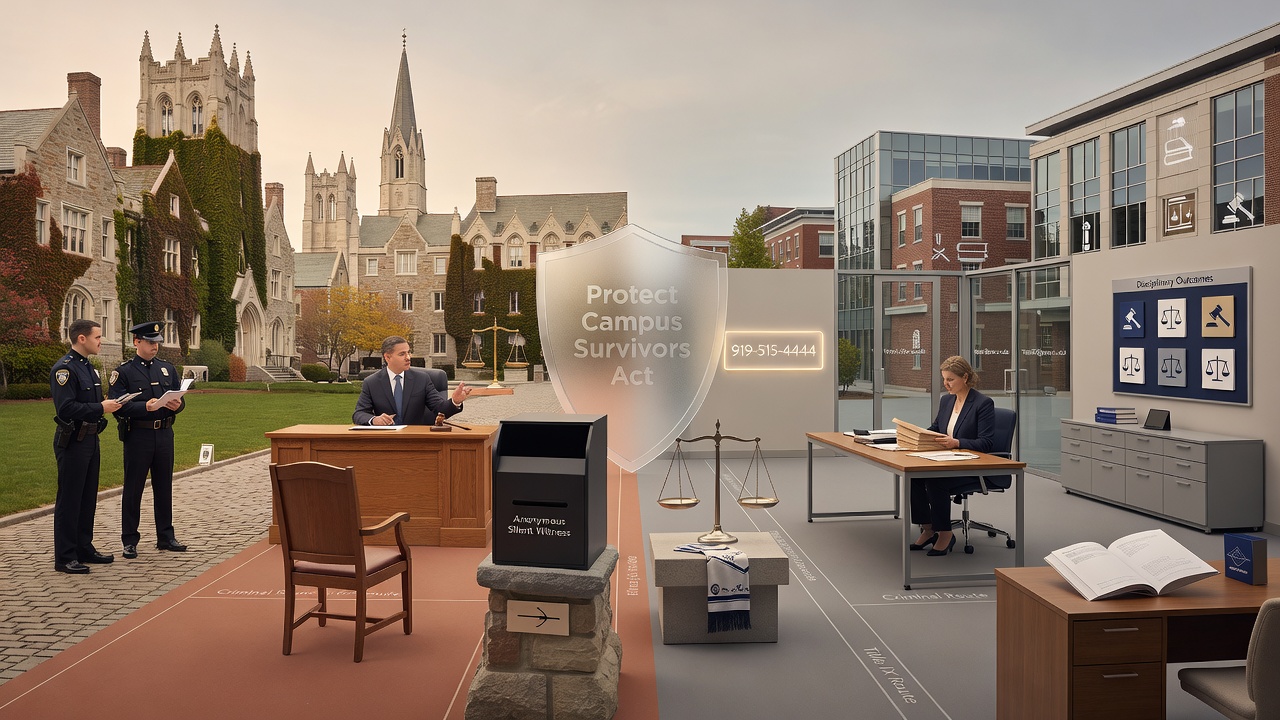
Students who experience sexual assault generally have two distinct - and not mutually exclusive - reporting options. One is a criminal complaint, made to campus police or local law enforcement, which can lead to an investigation and possible prosecution. The other is a Title IX complaint, filed through a university's internal compliance office, which can result in disciplinary action against a student, such as suspension or expulsion, without a criminal trial.Jeff Nieman, district attorney for Orange and Chatham counties in North Carolina, says reporting to police does not strip a victim of control. "It needs to be professionally investigated, regardless of the path it takes from there," he said, adding that his office gives victims "input and agency over the path we take on the case."Skye David, a staff attorney with the North Carolina Coalition Against Sexual Assault, notes that some survivors prefer the Title IX route because it is typically faster and less adversarial than a criminal trial. "If their goal is to feel safe on campus, to get the respondent out of their classes, or get him kicked out of school, then the Title IX process is for them," David said.
A New Privacy Layer - With Trade-offs
A North Carolina law passed this year, the Protect Campus Survivors Act, now shields personally identifying details in student disciplinary records across the University of North Carolina System from public records requests. That change means neither a complainant's nor a respondent's name is automatically disclosed in these records.Advocates say this can make reporting feel safer for survivors wary of public exposure. But the same protection applies to those accused of misconduct, and critics argue it may reduce transparency and public accountability in how universities handle repeat or serious offenders. This is a trade-off, not a settled resolution - North Carolina's approach differs from policies in other states, and its long-term effects are not yet documented.
How Reporting Works at Major Triangle Universities
Each university maintains its own intake channels, generally split between campus police and a compliance or equity office:
- UNC-Chapel Hill: Reports can go to UNC Police or the University Compliance Office (919-445-2759 or [email protected]), including anonymously through the Silent Witness system, though anonymous reports limit follow-up.
- Duke University: The Office for Institutional Equity accepts reports by phone (919-684-8222), email, or online form; Duke police can be reached at 919-684-2444.
- NC State University: Criminal matters go to NC State Police, while discrimination or harassment concerns go to the Office of Equal Opportunity (919-513-0574). A 24/7 sexual assault helpline is available at 919-515-4444.
- NC Central University: Reports can be filed through an online Title IX form or by emailing [email protected]; campus police can be reached at 919-530-6106.
What the Process Can and Cannot Guarantee
Officials and advocates caution that neither process guarantees a particular outcome. A criminal report may not lead to charges, as happened in the Cornell case after prosecutors declined to pursue it. A Title IX finding can result in campus sanctions but does not constitute a criminal conviction. Running both processes simultaneously is permitted and does not require choosing one over the other.Confidential support - separate from formal reporting - is also available at each university, including victim services offices and local crisis centers such as the Orange County Rape Crisis Center and the Durham Crisis Response Center. Advocates emphasize that seeking confidential support does not obligate a survivor to file any formal report.