
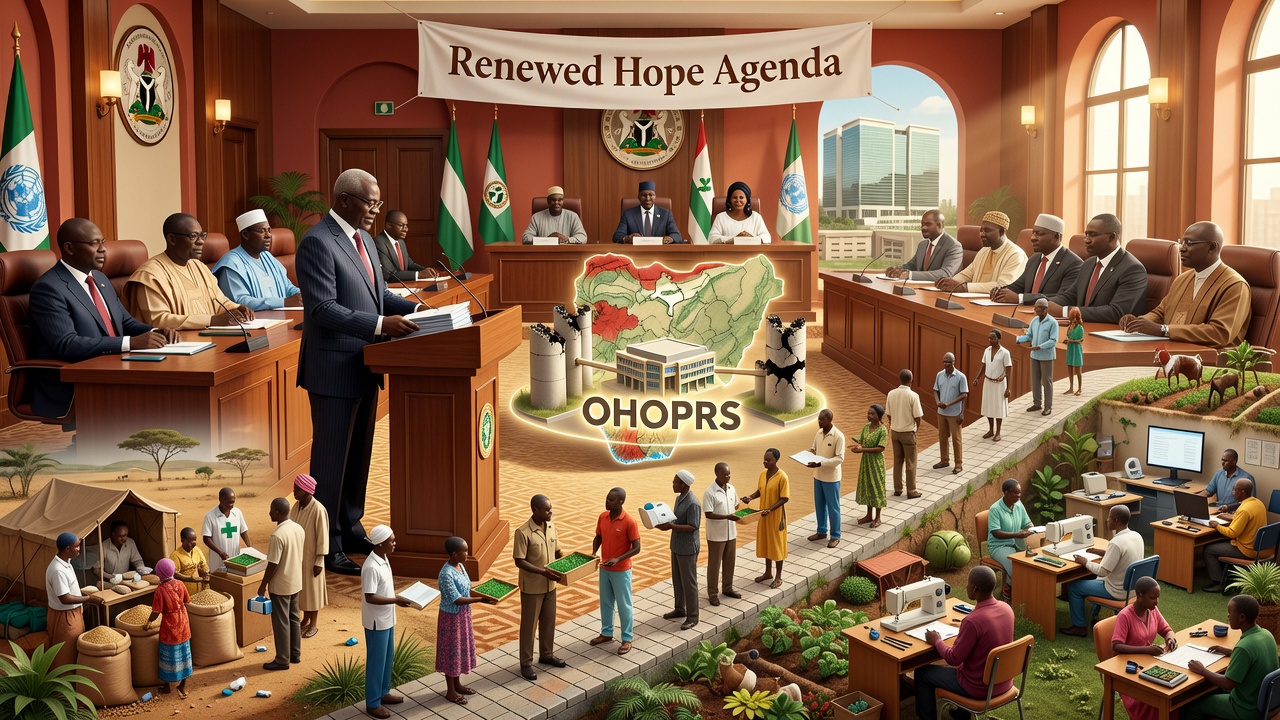
Nigeria's Federal Executive Council has approved a merger of the country's humanitarian aid, social protection and poverty reduction efforts into one coordinated structure called the One Humanitarian One Poverty Response System, or OHOPRS. Officials say the move is meant to end years of fragmented, overlapping government interventions and give vulnerable households a clearer path from emergency relief to lasting economic stability.
What the new framework changes
The Minister of Humanitarian Affairs and Poverty Reduction, Dr. Bernard M. Doro, presented the proposal to the council, which approved it on Wednesday. According to a ministry statement issued Thursday, the reform addresses a long-standing problem: humanitarian response, social protection and anti-poverty programs had largely operated as separate silos, leading to duplicated spending, gaps in who received help, and difficulty moving families from short-term aid to durable recovery.
Rather than launching another standalone program, the ministry describes OHOPRS as a system-wide restructuring that places households - not individual agencies - at the center of planning, service delivery and outcome tracking. Families displaced by conflict or other emergencies would still receive immediate support such as food, shelter and healthcare, but would simultaneously be connected to social protection schemes, education, skills training and livelihood programs.
Why coordination is the central goal
Doro framed the reform as a shift in philosophy rather than scale. "For too long, humanitarian assistance, social protection and poverty reduction have operated as separate interventions," he said, adding that OHOPRS is intended to link vulnerable Nigerians to "a structured pathway towards recovery, resilience and economic independence," instead of leaving them dependent on repeated emergency assistance.
The minister said FEC's approval formally embeds OHOPRS into the federal government's operating structure, moving it beyond a policy concept into actionable architecture. He emphasized that success would be measured by how effectively different programs work together to improve people's lives, not by how many separate initiatives exist on paper.
Origins and next steps
The framework was shaped with input from development partners and other stakeholders during a March 2026 workshop at the United Nations House in Abuja, and was publicly unveiled on August 26, 2026, by First Lady Senator Oluremi Tinubu and Doro at the State House Banquet Hall. The ministry describes OHOPRS as a pillar of President Bola Tinubu's Renewed Hope Agenda, which aims to lift large numbers of Nigerians out of poverty.
Following FEC's approval, the ministry says it will now coordinate with federal institutions, state and local authorities, development partners and civil society to roll out the system in practice. Specific implementation timelines, funding mechanisms and performance targets have not yet been detailed publicly, and how the framework performs will depend on execution across many agencies and levels of government.