
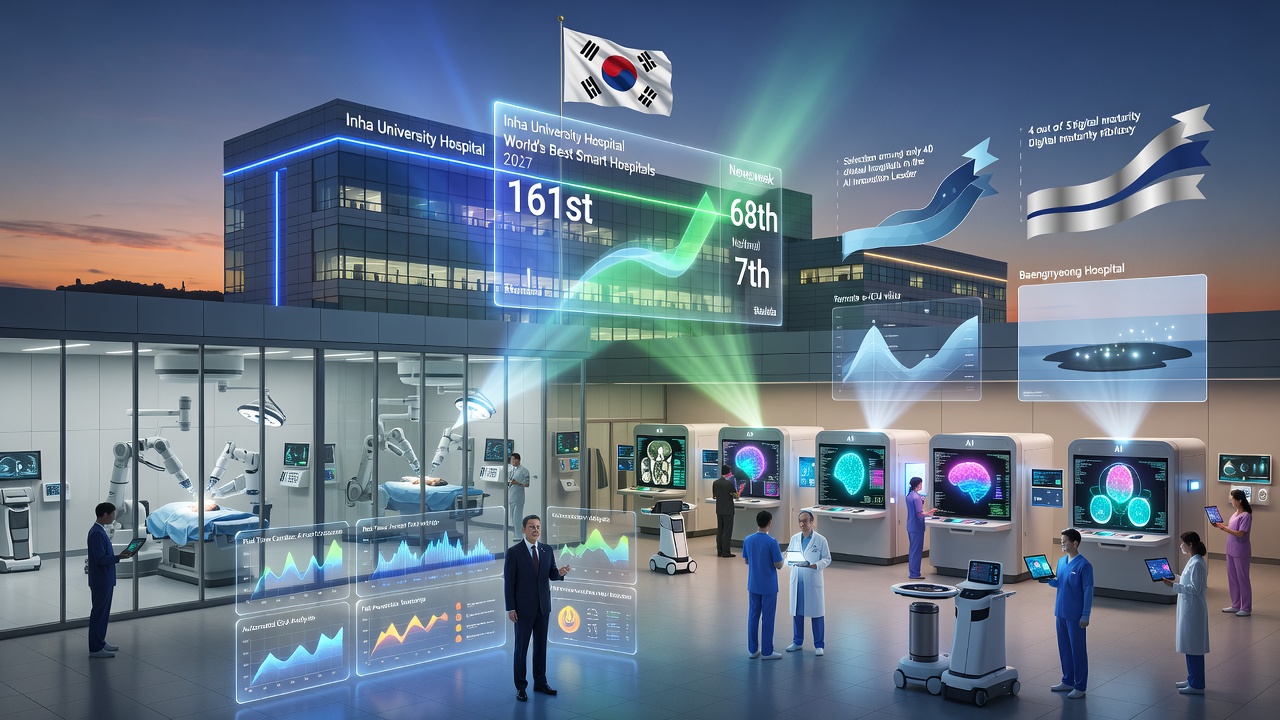
Inha University Hospital in Incheon, South Korea, rose to 68th place worldwide and seventh nationally in the "2027 World's Best Smart Hospitals" list published by Newsweek and Statista, the hospital said Friday. The leap from last year's 161st global ranking reflects the hospital's expanding use of artificial intelligence tools in patient care, from cardiac-risk prediction to automated imaging analysis.
What the Ranking Measures
The Newsweek-Statista assessment evaluates hospitals worldwide on their adoption of digital health technologies, surveying 410 institutions this year. Inha University Hospital was one of only 40 hospitals selected for a newly created "AI Innovation Leader" category, placing it among four South Korean hospitals recognized in that group. The hospital also received four out of five possible ribbons in a separate digital maturity assessment, a metric Statista uses to gauge how thoroughly a facility has integrated digital systems into daily operations.
AI Tools Already in Use
According to the hospital, its AI applications include a system that forecasts cardiac arrest risk in hospitalized patients as much as 24 hours before an event, a monitoring tool designed to reduce patient falls, and software that assists with electrocardiogram readings. Imaging analysis powered by AI has been applied to six types of scans, including brain MRIs and chest CT scans. The hospital also runs robotic surgery systems, a remote intensive care unit known as an e-ICU, and video consultation links with Baengnyeong Hospital, which serves a more remote island community.
Context and Limits
Rankings of this kind are based on self-reported data and expert surveys rather than independent clinical trials, so a high placement reflects the breadth of technology adoption rather than a formal measure of patient outcomes. The hospital said it plans to expand mobile care services and introduce robots for rehabilitation support and specimen transport. "Our efforts to apply digital technology to improving patient safety and the quality of care have been recognized internationally," said Lee Taek, president of Inha University Medical Center and Inha University Hospital, adding that the institution intends to keep validating AI tools that offer measurable benefits to patients.
Why It Matters for Patients
For patients and families, tools like early-warning cardiac monitoring and fall-prevention systems represent efforts to catch complications before they become emergencies, a goal shared by hospitals adopting similar technology internationally, including in the United States. However, the effectiveness of any AI-assisted system depends on how it is implemented and monitored in practice, and rankings alone do not substitute for peer-reviewed clinical evidence of improved outcomes.