
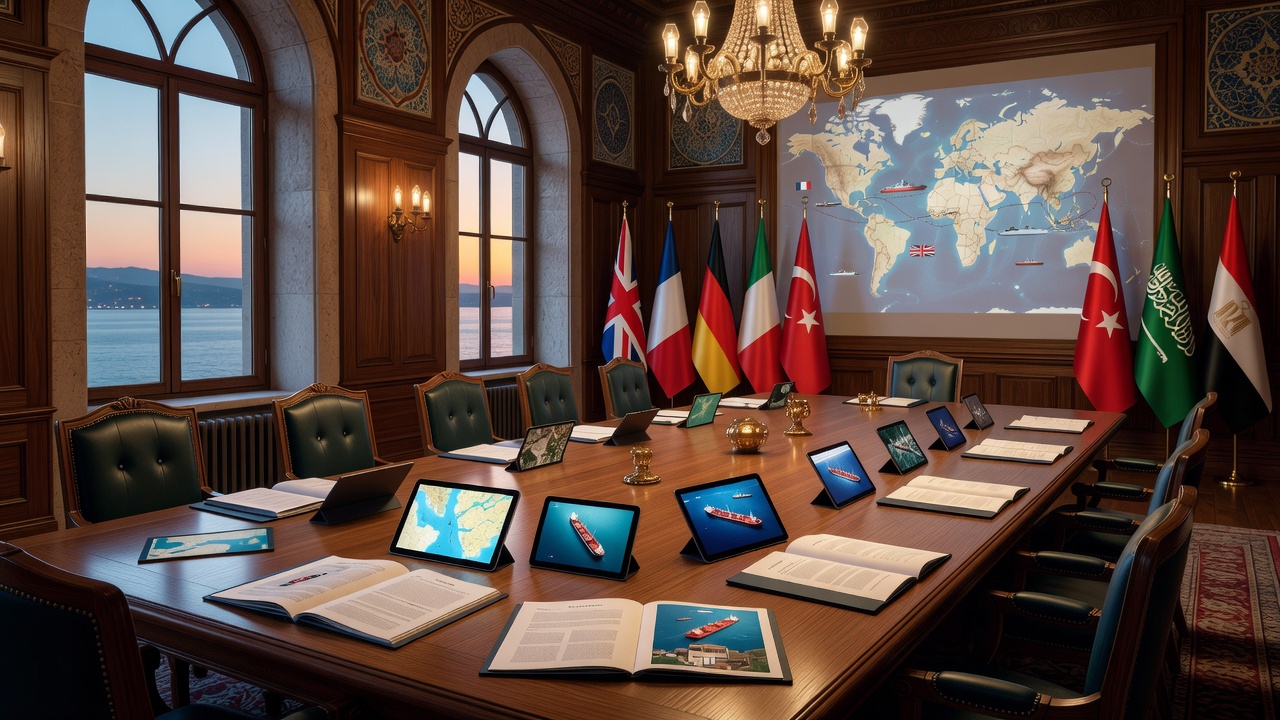
Foreign ministers from Britain, France, Germany, Italy, Turkey, Saudi Arabia, Pakistan and Egypt gathered in Istanbul on Friday in a first-of-its-kind diplomatic grouping, seeking to ease dangers around the Strait of Hormuz and the Bab el-Mandeb waterway. The talks addressed shipping disruptions tied to the Iran-related conflict, Houthi attacks on Saudi Arabia from Yemen, and efforts toward ending the war in Ukraine.
Why the Hormuz blockage matters
The Strait of Hormuz is a critical corridor for global oil shipments, and its closure during the Iran war has already pushed up energy prices and disrupted trade routes worldwide. French Foreign Minister Jean-Noel Barrot warned that further escalation between Iran and the United States "would create nothing but losers" and could carry serious consequences for hydrocarbon markets. Italy's Antonio Tajani echoed that military pressure alone cannot resolve the standoff, arguing that reopening Hormuz requires sustained dialogue with Tehran rather than confrontation.
Houthi attacks and Saudi Arabia's response
Parallel to the Hormuz crisis, intensified Houthi strikes from Yemen have forced Saudi Arabia to shut its main airport and postpone a major investment conference, while a maritime blockade has threatened the kingdom's crude oil exports. In response, allies have moved to shore up Saudi defenses: President Emmanuel Macron pledged French forces would help protect the Yanbu oil terminal on the Red Sea, and Britain said it would send fighter jets to assist Saudi air defense. Egypt's President Abdel Fattah al-Sisi has said Cairo would help defend Saudi territory but would not join any offensive action in Yemen.
A new, informal diplomatic platform
Turkish Foreign Minister Hakan Fidan, who hosted the session, described the format's value as its flexibility - allowing free exchange of ideas and rapid policy coordination without rigid structure. The meeting also reflects Turkey's expanding regional role through the Mecca Defence Alliance, a defense pact it launched with Saudi Arabia and Pakistan in August, which Ankara says remains open to additional members, including Egypt, though Cairo has not yet decided whether to join. Barrot confirmed the eight countries agreed to continue meeting at regular intervals, while Fidan stressed that all participants favor diplomacy over further military escalation, both in the Gulf and in Ukraine.
What remains uncertain
While the ministers expressed unified calls for restraint, the statements stop short of outlining concrete enforcement steps or a timeline for reopening Hormuz. Fidan himself acknowledged that outcomes depend heavily on choices made by regional states and global powers, leaving open whether this new diplomatic channel can translate stated intentions into verified de-escalation.