
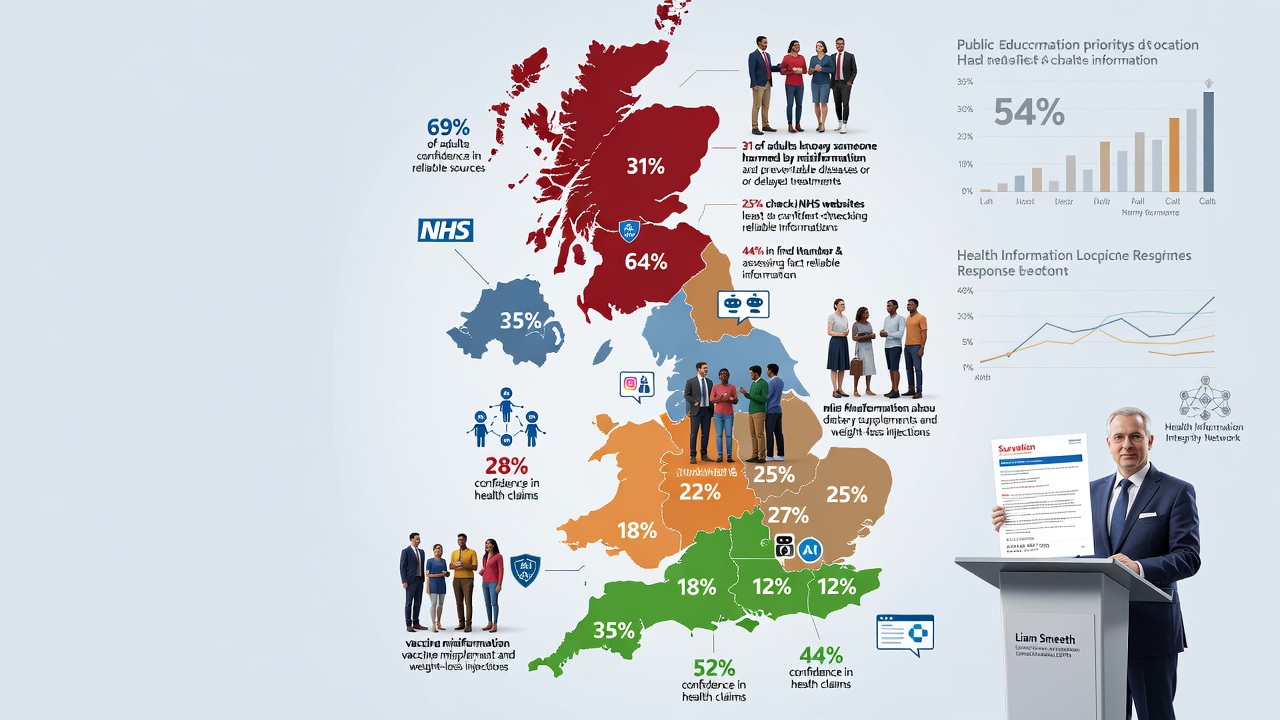
A regional breakdown of a national survey shows people in different parts of England report strikingly different experiences with health misinformation, from how much harm they witness to how confident they feel checking facts. The analysis, published by the London School of Hygiene & Tropical Medicine (LSHTM), is based on a survey of 2,110 UK adults conducted by Survation on September 9-10, 2026.
Wide Gaps in Harm and Confidence
Nearly a third of people in the North East of England (31%) said they knew someone who had suffered serious harm from a health decision based on misinformation - such as contracting a preventable disease or delaying treatment - compared with just 18% in the South East and West Midlands. Confidence in judging health claims also varied widely: only 28% of people in Yorkshire & Humber felt confident assessing whether a health claim was accurate, versus 52% in the South West. The same region, Yorkshire & Humber, also reported the lowest confidence in finding reliable health information (44%), compared with 69% in the North West.
Different Habits for Checking Claims
The report highlights distinct regional habits in how people verify health information. In the East of England, 64% said they checked claims against NHS or government websites, compared with 41% of Londoners. Londoners were more likely to turn to social media (25%) or AI chatbots (27%) than residents of the South West or East of England, where reliance on official sources or personal networks was more common. In the North East, 30% said they asked family or friends about health claims, compared with just 18% in the South East and South West.
Uneven Exposure to Misinformation Types
Exposure to specific misinformation topics also differed by region. Vaccine misinformation was reported by 35% of South West respondents but only 18% of Londoners. Misinformation about dietary supplements and weight-loss injections was more common in the East Midlands (25%) than the North East (14%), and mental health misinformation was reported by 22% in the East Midlands compared with 12% in the South East.
What the Findings Suggest
These regional findings build on the broader LSHTM report, which found 54% of UK adults rank public education on identifying misinformation among their top three priorities, with younger adults (18-24) and those over 65 reporting the least confidence in factchecking. Professor Liam Smeeth, Director of LSHTM, said the data suggest that people in neighboring regions can face very different levels of risk and different barriers to finding reliable information. The report's authors argue that national campaigns alone may not be sufficient and call for localized responses, including collaboration between local health authorities and researchers through the school's Health Information Integrity Network. They note further research is needed to understand the causes of these regional disparities and to identify which interventions work best for different age groups and communities.