
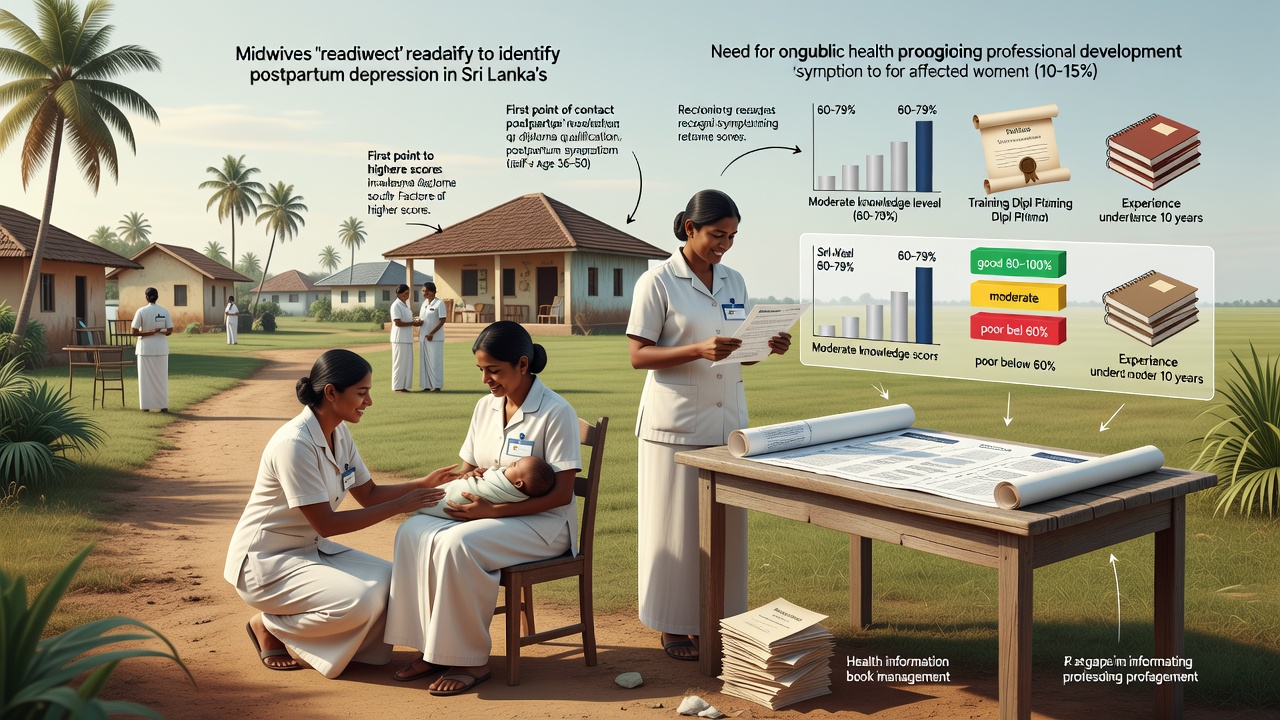
A cross-sectional survey of midwives in Sri Lanka's Jaffna district found that most have only a moderate understanding of postpartum depression and how to manage it, with knowledge levels closely tied to age, education and prior training. The study, published in BMC Nursing, surveyed 186 of 215 eligible midwives and points to specific gaps that targeted training could help close.
What the study measured
Researchers distributed a self-administered questionnaire to midwives practicing in Jaffna, achieving an 86.5% response rate. The survey covered socio-demographic background, service-related factors, and knowledge of postpartum depression and its clinical management. It was developed with input from academic supervisors, checked for clarity, and pretested among five midwives who were then excluded from the final analysis to avoid bias.
Knowledge scores were converted to percentages and sorted using standard knowledge-attitude-practice benchmarks: 80-100% indicated good knowledge, 60-79% moderate, and below 60% poor. More than half of participants landed in the moderate category, suggesting a workable but incomplete foundation for identifying the condition.
Who scored higher, and why it matters
The analysis linked stronger knowledge scores to several factors, all statistically significant at p values below 0.05: midwives aged 36-50, those holding diploma-level qualifications, and those with ten or fewer years of professional experience tended to score higher. Most respondents overall were between 31 and 40 years old and held Advanced Level midwifery training, a common credential pathway in Sri Lanka's maternal health workforce.
Because midwives frequently serve as the first point of contact for new mothers in community settings, their ability to recognize warning signs carries practical weight. Postpartum depression affects an estimated 10-15% of women after childbirth and can influence maternal recovery, infant development and broader family stability, making early recognition and appropriate referral a meaningful public health function.
Limits of the findings
The authors are explicit that this is a descriptive, single-district snapshot rather than a study of change over time or cause and effect. Its findings describe the midwives surveyed in Jaffna and should not be generalized to other districts or countries without further research. The researchers also note that despite moderate overall knowledge, specific gaps remain in how midwives recognize and manage the condition in practice.
What the researchers recommend
The study calls for targeted educational interventions and ongoing professional development to strengthen midwives' capacity to identify and manage postpartum depression. Such measures, the authors suggest, could help close the gaps tied to limited training or practical exposure and ultimately support better maternal mental health outcomes in the region.