
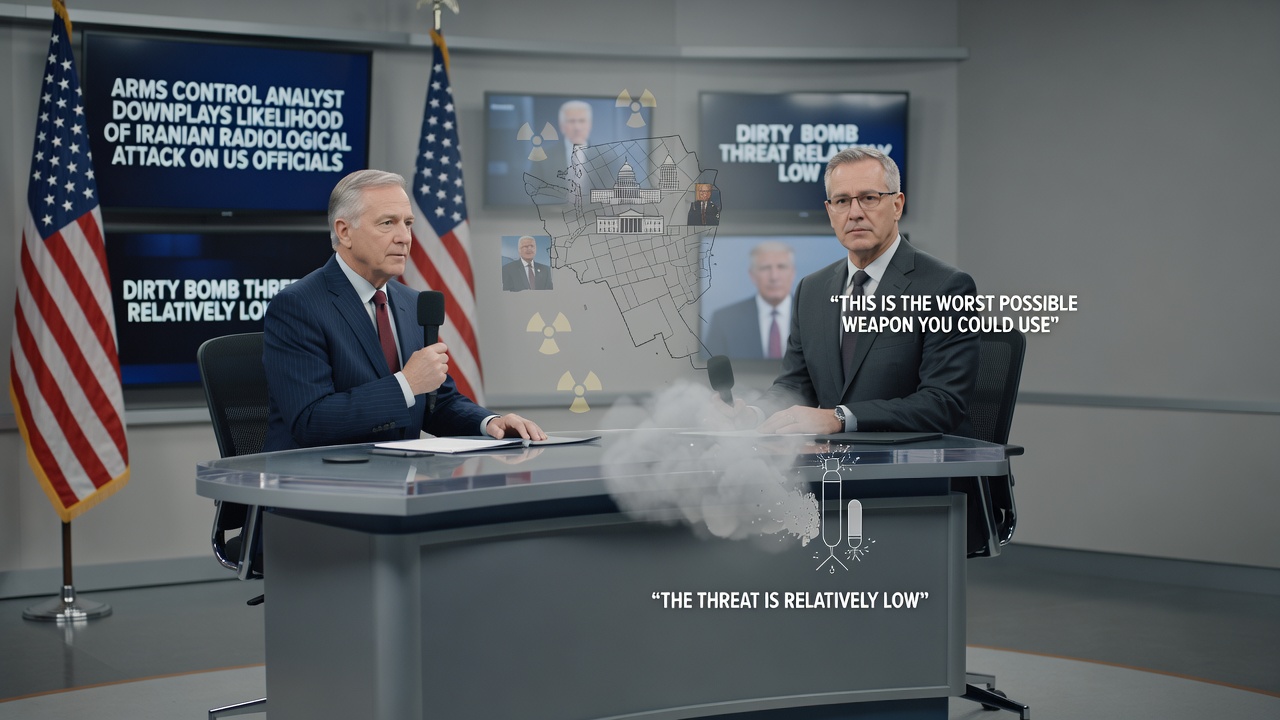
A nonproliferation specialist is cautioning against alarm over reports that Iran may be weighing a so-called "dirty bomb" plot targeting senior U.S. officials, calling the probability of such an attack low even as the symbolic threat draws scrutiny in Washington. The assessment comes from John Erath, Senior Policy Director at the Center for Arms Control and Non-Proliferation, in comments made to a Washington, D.C. television outlet.
What a Dirty Bomb Actually Is
A dirty bomb, formally known as a radiological dispersal device, combines conventional explosives with radioactive material to spread contamination over an area. Unlike a nuclear weapon, which relies on a nuclear chain reaction to produce a massive explosive yield, a dirty bomb is primarily a tool of disruption and psychological impact rather than mass casualties. Experts in radiological security have long noted that while such devices are technically easier to assemble than nuclear weapons, their destructive potential is far more limited and largely dependent on the type and quantity of radioactive material used.
Erath's Assessment of the Reported Threat
Speaking with Fox 5 DC's Bob Barnard, Erath addressed reports suggesting Iran could be targeting high-ranking officials within the Trump administration using such a device. "We should be concerned about any possibility of the use of weapons of mass destruction, but in this case, the threat is relatively low," Erath said. He added a pointed observation about the mismatch between the reported intent and the weapon allegedly under consideration: "Supposedly Iran is targeting certain individuals who are high up in the Trump administration. If you're going to do that, this is the worst possible weapon you could use to do that." His remark underscores that a dirty bomb is poorly suited for precision targeting of specific individuals, since its effects are diffuse and unpredictable rather than concentrated.
Context and Limits of What Is Known
The available reporting describes an alleged plot and warnings attributed to the Trump administration, but does not detail the evidentiary basis, timeline or specific individuals purportedly targeted. Erath's comments represent expert analysis rather than confirmation of operational details, and his framing suggests skepticism about the plot's feasibility as described rather than an endorsement of its credibility. Readers should treat claims about specific attack plans as unverified pending further official disclosure, while recognizing that U.S. agencies routinely monitor radiological security risks as a standing precaution independent of any single reported threat.
Why Radiological Security Still Matters
Even when specific threats prove overstated, nonproliferation experts emphasize that securing radioactive materials used in medicine, industry and research remains a persistent international priority. Agencies such as the U.S. Nuclear Regulatory Commission and international bodies like the International Atomic Energy Agency work to track and secure such materials precisely because the barrier to acquiring them, however limited in destructive power, is lower than that for nuclear weapons. Erath's comments reflect a broader analytical stance within the arms control community: distinguishing between genuine weapons of mass destruction risk and scenarios where the rhetoric of a plot may outpace its practical viability.